
New Build vs Older Villa in Dénia: Which Makes More Financial Sense in 2026?
Property buyers on the Costa Blanca North are asking a different question in 2026 than they were five or six years ago.
It used to be relatively straightforward. Buy an older villa in a good location, renovate it carefully, and you would almost always come out financially ahead compared to buying new.
Now? The maths is no longer so clear.
Construction costs have risen sharply across Spain. Reliable builders around Dénia, Jávea and Moraira are often booked months in advance. Energy efficiency standards have changed buyer expectations. Even relatively modest projects can expand quickly once work actually begins.
At the same time, new-build prices have climbed enough that many buyers start wondering whether paying the premium really makes sense.
That is the interesting part.
Because once you compare the real ownership costs properly, the gap between renovating and buying new is often far smaller than buyers initially expect.
To illustrate that, it helps to look at two real villas currently for sale through Grupo Garcia.
One is an older villa in Les Rotes with panoramic sea views and obvious long-term potential. The other is a modern new-build villa under construction in El Tossal.
Both appeal to the same buyer profile more than you might imagine.
The Two Villas We’re Comparing
The first property is Villa Rotes, an older Mediterranean villa in the Les Rotes area of Dénia.
Les Rotes has a character that newer urbanisations struggle to replicate. Pine trees, older stone walls, mature gardens, sea-facing terraces and narrow roads leading down towards rocky coves rather than commercial zones. It feels quieter. More established. Less transient.
That atmosphere matters more than many buyers realise at the beginning of their search.
The second property is Villa Tossal, a contemporary villa currently under construction with the kind of features many international buyers now expect automatically:
- open-plan living,
- strong insulation,
- modern glazing,
- energy-efficient climate systems,
- cleaner architectural lines,
- lower immediate maintenance requirements.
On paper, the comparison initially looks simple.
The older villa appears cheaper.
The new build appears easier.
But once realistic renovation costs enter the equation, things become more nuanced.
What Buyers Usually Notice First
Most buyers respond emotionally before they respond financially.
The Les Rotes villa wins immediately on atmosphere. Mature landscaping. Privacy. Sea views integrated into the plot rather than engineered around it. Outdoor spaces that feel naturally Mediterranean rather than recently designed to photograph well online.
Older villas in this part of the Costa Blanca often have details buyers continue to value:
- deeper covered terraces,
- more shade,
- thicker walls,
- larger plots,
- more distance between neighbours.
You notice it particularly in summer. Some older villas simply feel calmer outdoors because they were designed around climate rather than aesthetics alone.
The new-build villa, however, wins strongly on simplicity.
No renovation uncertainty. No questions about old plumbing hidden behind walls. No concerns about insulation standards or ageing electrics. Buyers know roughly what their ownership experience will look like from day one.
For many northern European buyers spending extended periods in Spain, that predictability has real value.
Especially when managing a renovation remotely from another country can quickly become stressful.
Renovation Costs on the Costa Blanca North in 2026
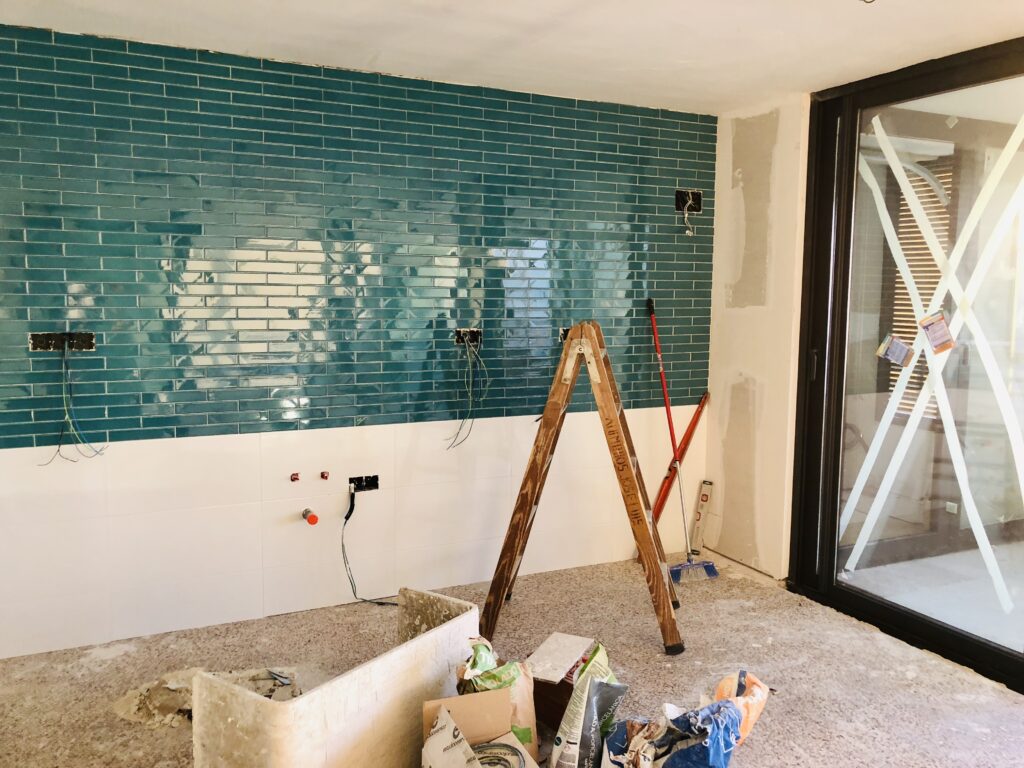
This is where expectations and reality often separate.
Many international buyers still arrive assuming renovation costs in Spain are relatively low. In some inland areas, that can still be true for cosmetic updates. Prime coastal areas around Dénia and Jávea are different.
In 2026, realistic renovation ranges look more like this:
- Cosmetic updates: €350 to €700/m²
- Mid-level renovation: €800 to €1,400/m²
- High-end renovation: €1,500 to €2,500+/m²
And those figures rise quickly once exterior or structural work becomes involved.
The important distinction is this:
Buyers purchasing a villa in Les Rotes at this price point rarely stop at cosmetic improvements.
Projects tend to expand naturally:
- new glazing,
- pool redesign,
- exterior lighting,
- climate systems,
- insulation upgrades,
- landscaping,
- outdoor kitchens,
- smart-home integration,
- solar systems,
- terrace reconstruction,
- premium bathrooms and kitchens.
Once buyers begin modernising properly, budgets move fast.
That is where many initial assumptions break down.
Structural Work vs Cosmetic Work
This is the part buyers most frequently underestimate.
Replacing flooring or modernising a kitchen is relatively straightforward. Structural surprises are another matter entirely.
On older Costa Blanca villas, the most common hidden issues are usually:
- ageing plumbing systems,
- older electrical installations,
- insufficient insulation,
- moisture ingress,
- terrace waterproofing,
- retaining wall movement,
- outdated drainage or septic systems.
Sea-facing properties can also suffer much more weather exposure than inland buyers expect. Salt and humidity affect exterior finishes, aluminium systems and terraces significantly over time.
A villa that appears “mostly cosmetic” during a viewing can become a substantially larger project once work actually starts.
That does not mean older villas are a poor investment. Some of the most impressive homes on the Costa Blanca North are older properties that have been intelligently renovated over several years.
But realistic budgeting matters.
Licences, Architects and Timeframes
The renovation itself is only part of the process.
Depending on the scale of work, buyers may also need:
- architect drawings,
- technical architect supervision,
- municipal licences,
- structural reports,
- energy compliance updates.
And timelines in 2026 are rarely quick.
Good builders in the Marina Alta are busy. Very busy.
Some buyers spend their first year in Spain managing quotations, permits and contractor schedules rather than actually enjoying the property they purchased.
That experience suits certain personalities perfectly. Other buyers discover halfway through the process that they would rather have paid more upfront for certainty.
That is usually the moment the attraction of turnkey new builds starts making more sense.
Running Costs and Energy Efficiency
This is one area where modern villas often perform genuinely better financially.
A contemporary new-build villa usually offers:
- stronger insulation,
- better glazing,
- lower heating and cooling costs,
- modern climate systems,
- integrated solar compatibility,
- improved energy certification.
That matters increasingly because many buyers now live on the Costa Blanca year-round rather than simply using properties seasonally.
An older villa with outdated insulation and inefficient systems can become expensive to run over time unless modernised properly.
That said, renovated older villas can still perform very well once climate systems, glazing and insulation are upgraded intelligently.
Again, nuance matters more than blanket assumptions.
Which Type of Ownership Experience Suits You Best?
By this stage, most buyers realise the decision is less about “old versus new” and more about the kind of ownership experience they actually want.
| Question | Older Villa / Renovation Route | New Build Route |
| Do you want to move in immediately? | Usually no. Even “liveable” villas often lead to upgrades over time. | Yes. Typically turnkey with minimal immediate work. |
| Are you comfortable managing builders and licences in Spain? | Important. Renovations nearly always involve coordination, delays and decisions. | Much less involvement after completion. |
| What matters more to you emotionally? | Character, mature plots, established neighbourhoods, sea-view charm. | Clean design, simplicity, contemporary living. |
| What tends to have lower running costs? | Depends heavily on renovation quality and insulation upgrades. | Usually lower due to modern systems and energy efficiency. |
| Which option carries more uncertainty? | Older villas. Hidden structural or infrastructure issues can appear later. | Lower risk overall, especially in the first 10 years. |
| Which usually offers stronger individuality? | Older villas almost always feel more unique. | Some new builds can feel similar architecturally. |
| What about long-term maintenance? | Typically higher over time, especially near the sea. | Lower initially, though modern systems can be expensive when they eventually fail. |
| Which works best for remote buyers? | Can become stressful if you are not based locally. | Easier for buyers splitting time between countries. |
| What often holds value best long term? | Exceptional locations like Les Rotes can outperform due to scarcity. | Strong demand remains for efficient turnkey homes. |
| Where do buyers most commonly underestimate costs? | Renovation budgets, timelines, drainage, insulation and exterior work. | Furnishing, landscaping, taxes and completion extras. |
| Best suited to… | Buyers who value location, character and are comfortable with complexity. | Buyers prioritising convenience, efficiency and predictability. |
The Real Cost Comparison
This is where the comparison becomes genuinely interesting.
At first glance, the older villa appears substantially cheaper. In practice, once buyers renovate to a comparable standard, the total investment often ends up surprisingly close.
| Cost Area | Villa Rotes (Older Villa) | Villa Tossal (New Build) |
| Purchase Price | ~€690,000 | ~€990,000 |
| Purchase Taxes & Fees (approx.) | ~€80,000 to €95,000 | ~€120,000 to €140,000 |
| Realistic High-End Renovation Budget | ~€220,000 to €350,000+ | Minimal initially |
| Furnishing & Exterior Finishing | ~€50,000 to €100,000 | ~€40,000 to €100,000 |
| Estimated Total Real Acquisition Cost | ~€1.04M to €1.23M | ~€1.15M to €1.23M |
| Likely 3-Year Ownership Position | Possible further upgrades and maintenance | Generally stable and predictable |
| Main Financial Risk | Renovation escalation and hidden structural costs | Paying a premium upfront |
| Main Lifestyle Risk | Delays, licences and contractor coordination | Less character and individuality |
Once realistic renovation standards are applied, the financial gap between the two properties becomes much smaller than many buyers expect.
That is something people often only discover after speaking with architects and builders locally.
So Which Makes More Financial Sense?
There is no universal answer.
For buyers prioritising simplicity, energy efficiency and predictability, modern new builds increasingly justify their higher prices.
For buyers who care more about mature locations, individuality and long-term character, older villas in exceptional areas like Les Rotes still offer something difficult to recreate.
And that scarcity matters.
There will always be another modern villa project somewhere on the Costa Blanca. Truly established sea-view locations are much harder to reproduce.
The important thing is understanding the real ownership costs before making assumptions based purely on the asking price.
That is usually where expensive mistakes happen.
If you are comparing renovation opportunities and new-build villas in Dénia, Jávea or Moraira, the team at Grupo Garcia can help you assess not just asking prices, but realistic renovation budgets, ownership costs and long-term resale potential. Use the enquiry form on any property listing to discuss the practical realities behind the property, not just the photographs.
FAQs
Is it cheaper to renovate a villa in Spain than buy a new build?
Not always. On the Costa Blanca North, renovation costs have risen sharply in recent years. Once taxes, licences, builders, architects and high-end finishes are included, the final investment can approach the cost of a modern new-build villa.
How much does it cost to renovate a villa on the Costa Blanca in 2026?
Cosmetic updates typically start around €350 to €700/m². Full high-end renovations can easily exceed €1,500 to €2,500/m² depending on structural work, sea exposure and finish quality.
What hidden renovation costs do buyers often miss?
The biggest surprises are usually insulation upgrades, drainage, retaining walls, rewiring, plumbing, terrace waterproofing and exterior works. Many buyers also underestimate architect fees and licence costs.
Are older villas in Dénia a good investment?
Yes, particularly in established areas such as Les Rotes where sea-view plots are limited. Well-renovated villas in strong locations often maintain long-term appeal because the setting itself is difficult to replicate.
Do new-build villas have lower running costs?
Usually yes. Modern villas generally include better insulation, energy-efficient glazing, aerothermal systems and solar compatibility, which can reduce long-term heating and cooling costs significantly.
This article compares the true financial cost of buying and renovating an older villa versus purchasing a new build on the Costa Blanca North in 2026, arguing that the apparent price advantage of older properties largely disappears once realistic renovation costs are factored in — high-end refurbishments now run €1,500–2,500+/m², meaning a ~€690k older villa can reach a total acquisition cost of €1.04M–1.23M, comparable to a ~€990k new build at €1.15M–1.23M all-in. It contrasts the two options across key dimensions: new builds offer energy efficiency, predictability, and lower running costs suited to remote or convenience-focused buyers, while older villas in established sea-view areas like Les Rotes offer character, mature plots, and location scarcity that is hard to replicate. The core takeaway is that buyers should model total ownership costs — including taxes, architect fees, licences, and likely renovation escalation — rather than comparing asking prices alone.